Filed under: Thailand
Now, for one of my favorite musical subjects…the khaen!
The northeast region of Thailand is called Isan and is made up of a majority of Lao speaking people. The music and instruments are distinct from the rest of Thailand, the main instrument being the free-reed mouth organ called khaen (pronounced “can”, it’s often spelled khene, khen, or any number of variations.) It consists of a series of bamboo pipes in two rows fitted into a wooden holder. The player breathes in and out of the wooden wind chest, fingering holes on either side. Each pipe has it’s own free reed, similar to a harmonica.
The player sets up hypnotic pentatonic grooves, usually to back up a singer. It’s interesting to note that the musical pitches are very close to Western scales, as opposed to the rest of Thai music where the scale is divided more or less evenly into seven notes.
The khaen is also the dominant instrument in Lao music. Here’s a Lao khaen player from 1902:

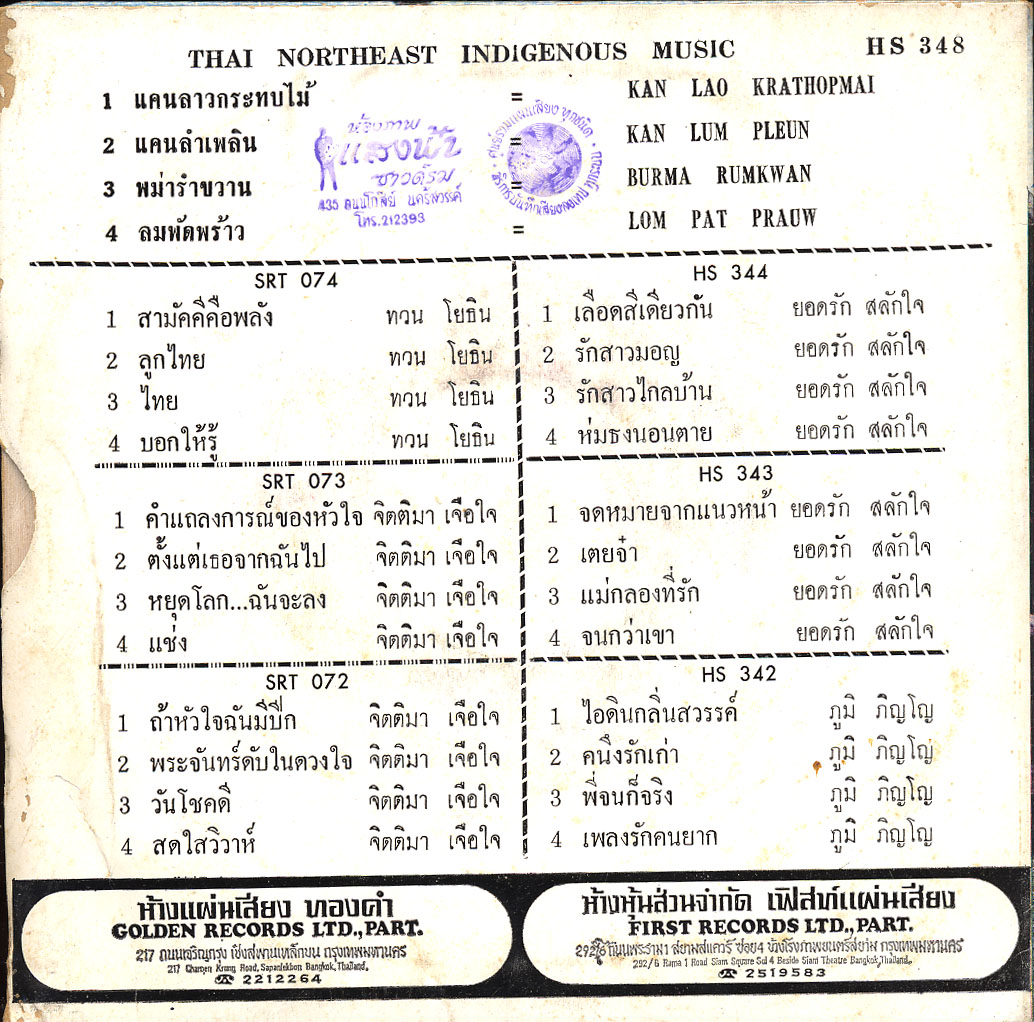
There are two songs on each side of this 45rpm record from the 1960s…here are both the songs from side one; Kan Lao Kra Thomai and Kan Lum Pleun played by Thongkham Thaikla (thanks again to Peter Doolan for artist translation.)


Filed under: Thailand
More great Southeast Asian graphics…

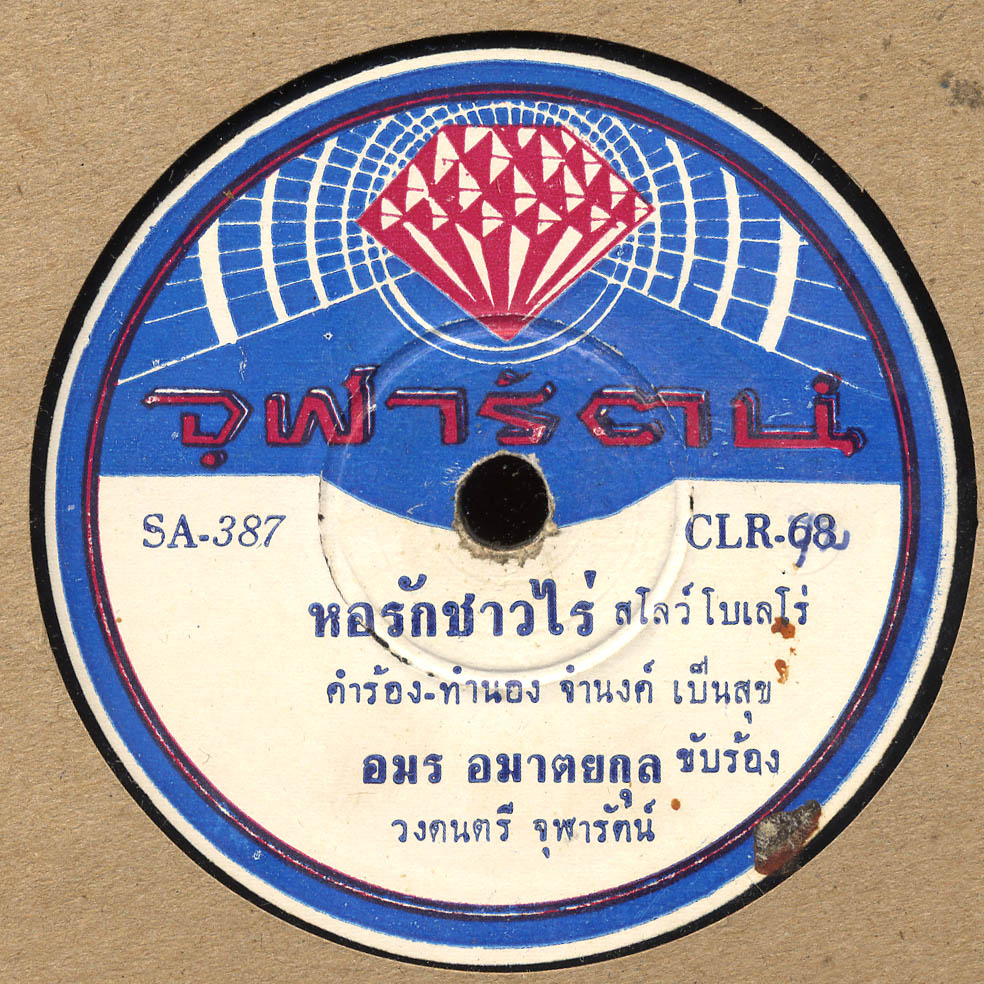


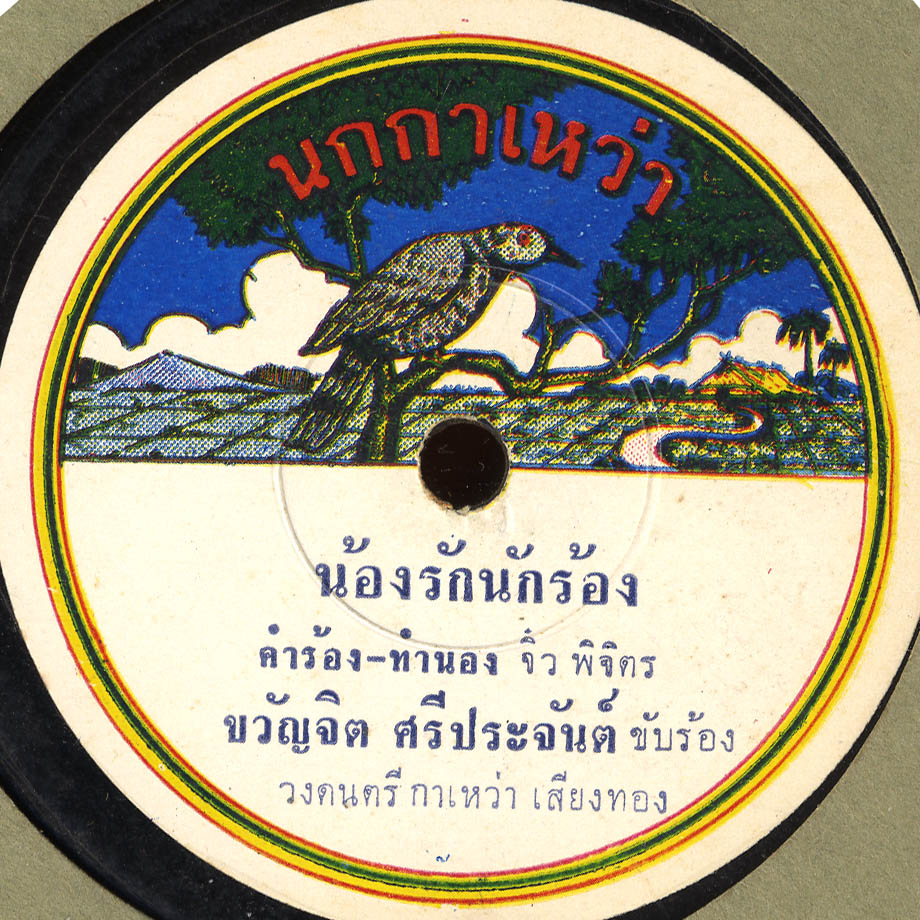

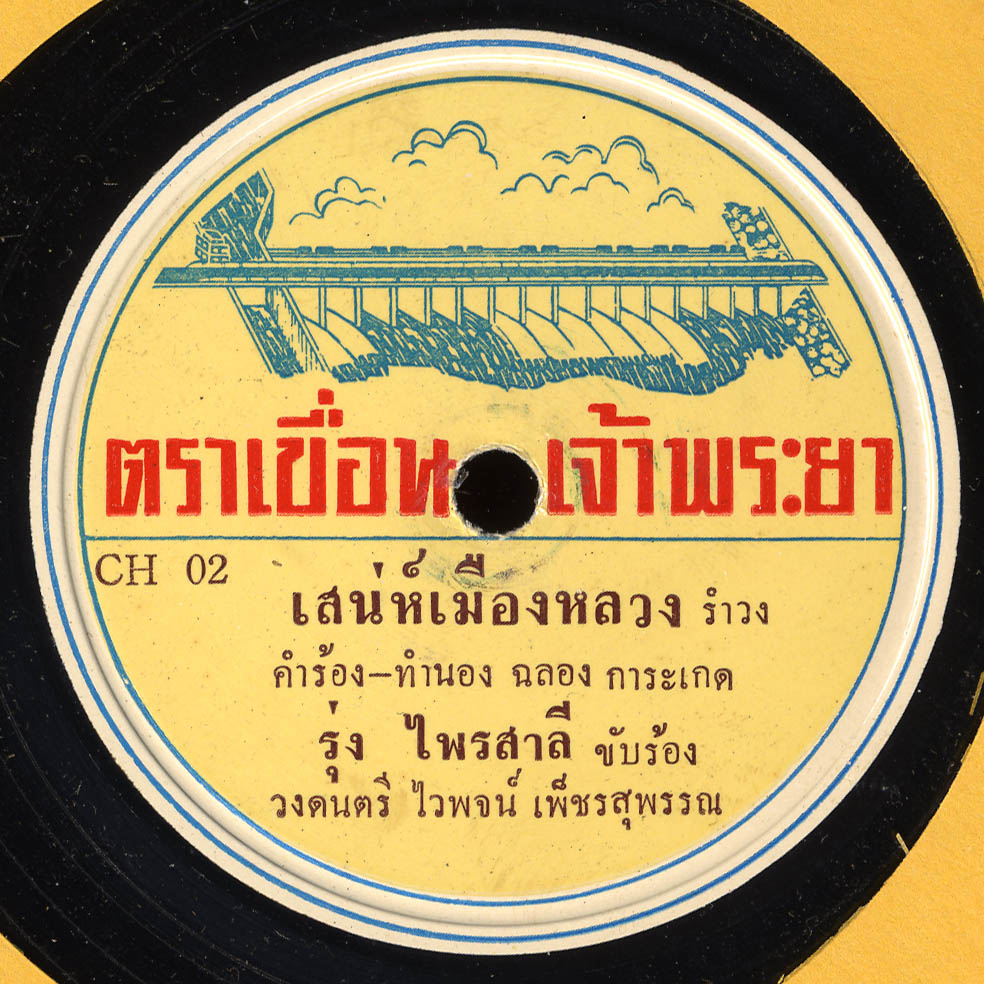
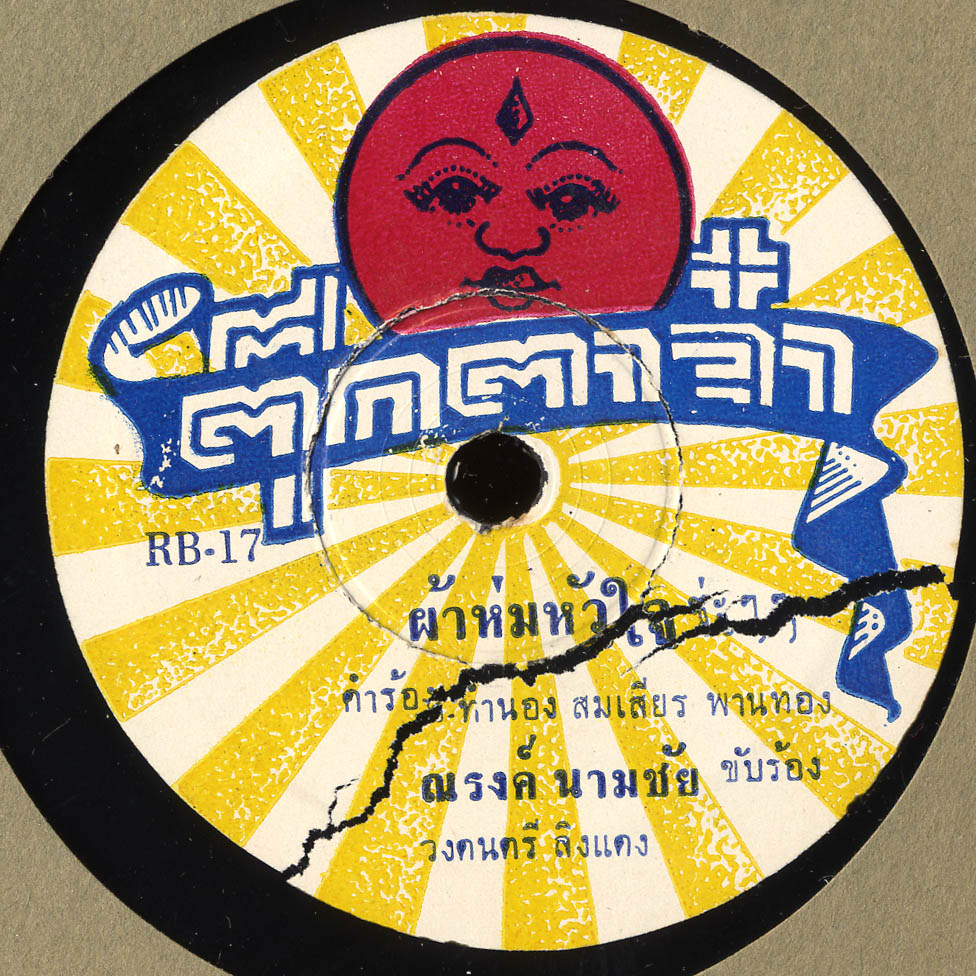
Filed under: Thailand
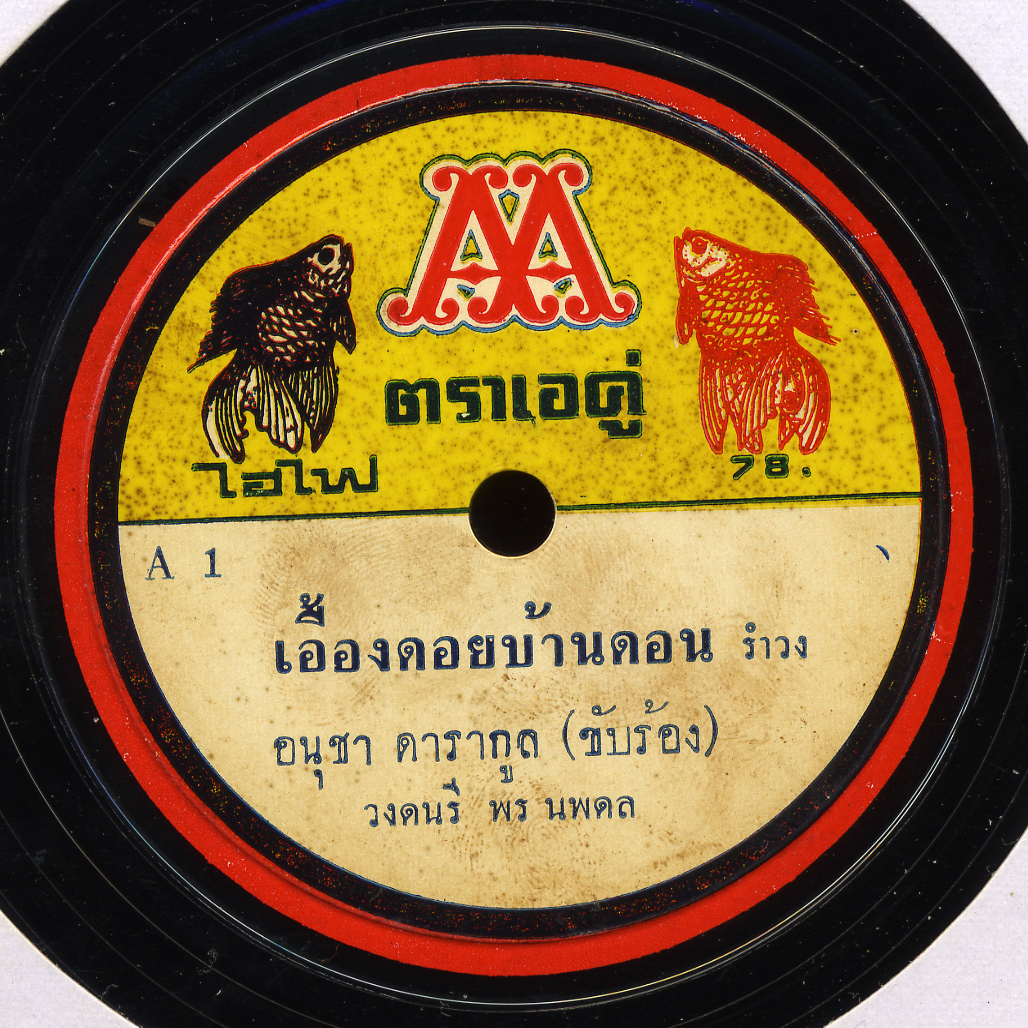
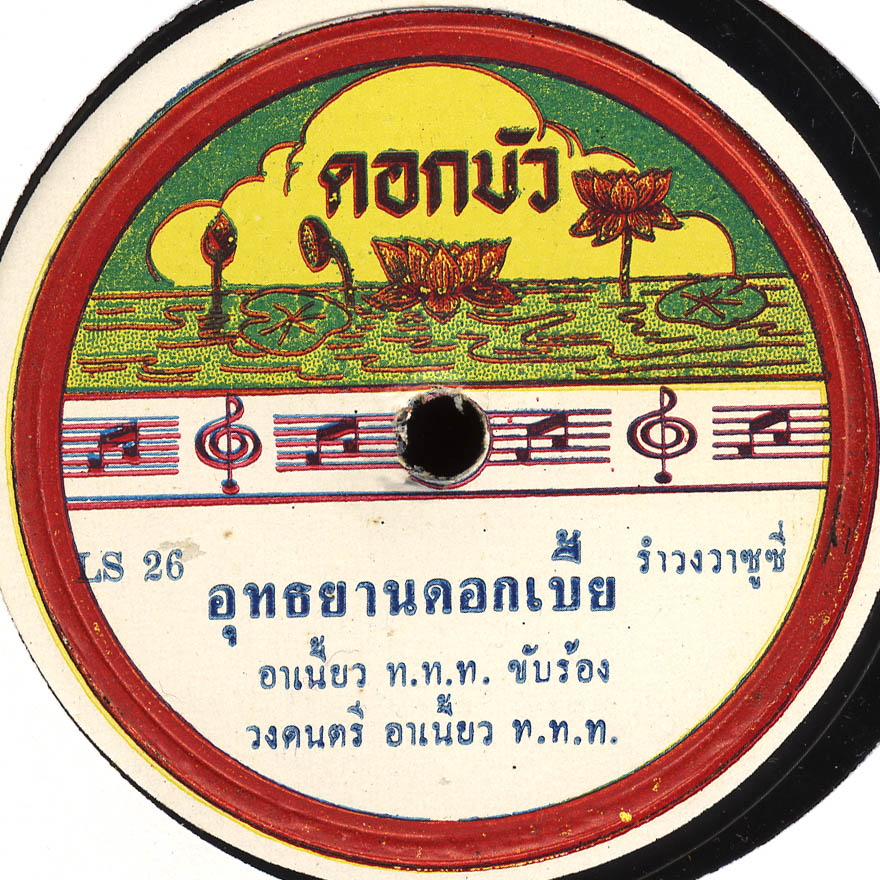
In the 1950s, rural Thais from the northeast (Isan) and elsewhere began moving to the big cities to look for work. It’s the same old story found all across the world – the rural music was transformed in urban ghettos and a new popular music was born. The huge success of some of the big stars of the 50s such as Waiphot Phetsuhan, Phloen Phromdaen and Suraphon Sombatchoroen inspired many rural people to dream of escaping poverty by becoming luk thung stars. Independent record labels proliferated and continued releasing luk thung 78s into the 1960’s. By the 1980’s, luk thung was the unrivaled pop music of Thailand and only recently has a modernized type of molam begun to catch up. We’ll look at some early molam soon.
Here’s the famous Phloen Phromdaen singing the song Lam Kaen:
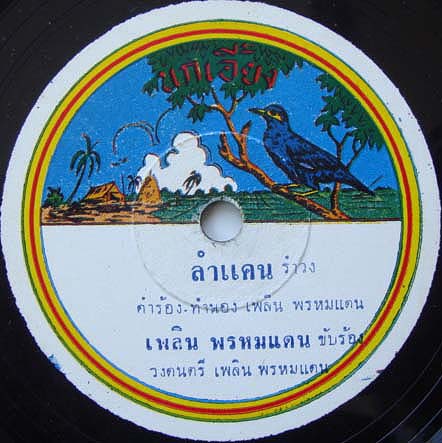
Thanks to Peter at Monrakplengthai for translation and copious information. Plenty more luk thung on his site!
Filed under: Thailand
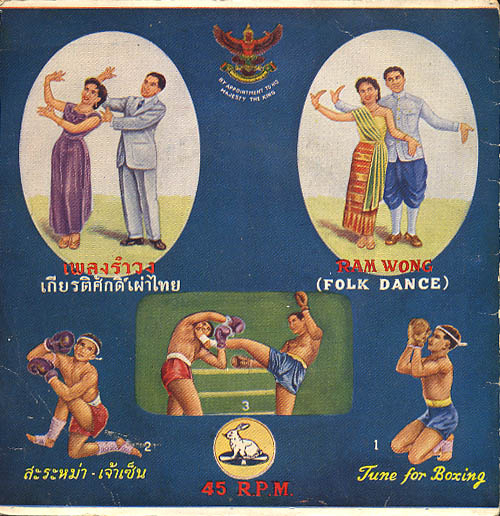
The various musics of Thailand were widely recorded during the 78 era, but there are many excellent recordings from the 60s released on 45 rpm 7 inch records as well. Often these 45s contain great traditional music and include some styles that were not recorded widely, if at all, on 78.
Such is the case with this 7 inch record on the Rabbit label. One side is some rather uninteresting pop music in the ramwong style. But the side we’re listening to here is muay thai, that is, music played during Thai kickboxing matches. Muay thai is a popular fighting sport that exists in different versions all across Southeast Asia and is hundreds of years old. The music is used to accompany the fighting. It begins slowly while the boxers pay their respects to their teachers and then increases in intensity as the fight escalates. I suppose there were many sports that used ritualistic musical accompaniment in the past, but this is one of the last, as far as I know.
The main instrument is the pi, the Thai “oboe”, which is related to many shawm-like instruments across Asia. The percussion instruments consist of , a pair of drums called klong kaak, the tiny finger cymbals called ching, and the gong called kong mong.
The 45s hold about twice as much music per side as a 78, so this is a nice long track. I wonder if it was recorded during an actual match?
Filed under: Thailand
Phleng Sansoen Phra Barami (เพลงสรรเสริญพระบารมี) is the Thai Royal Anthem. The music, composed by the Russian composer Pyotr Schurovsky, was the national anthem of Siam until 1932, when it was replaced by Phleng Chat. Most versions I’ve heard include the lyrics that were composed by Prince Narisaranuvadtivongs, around 1913, and were later revised by King Rama VI.
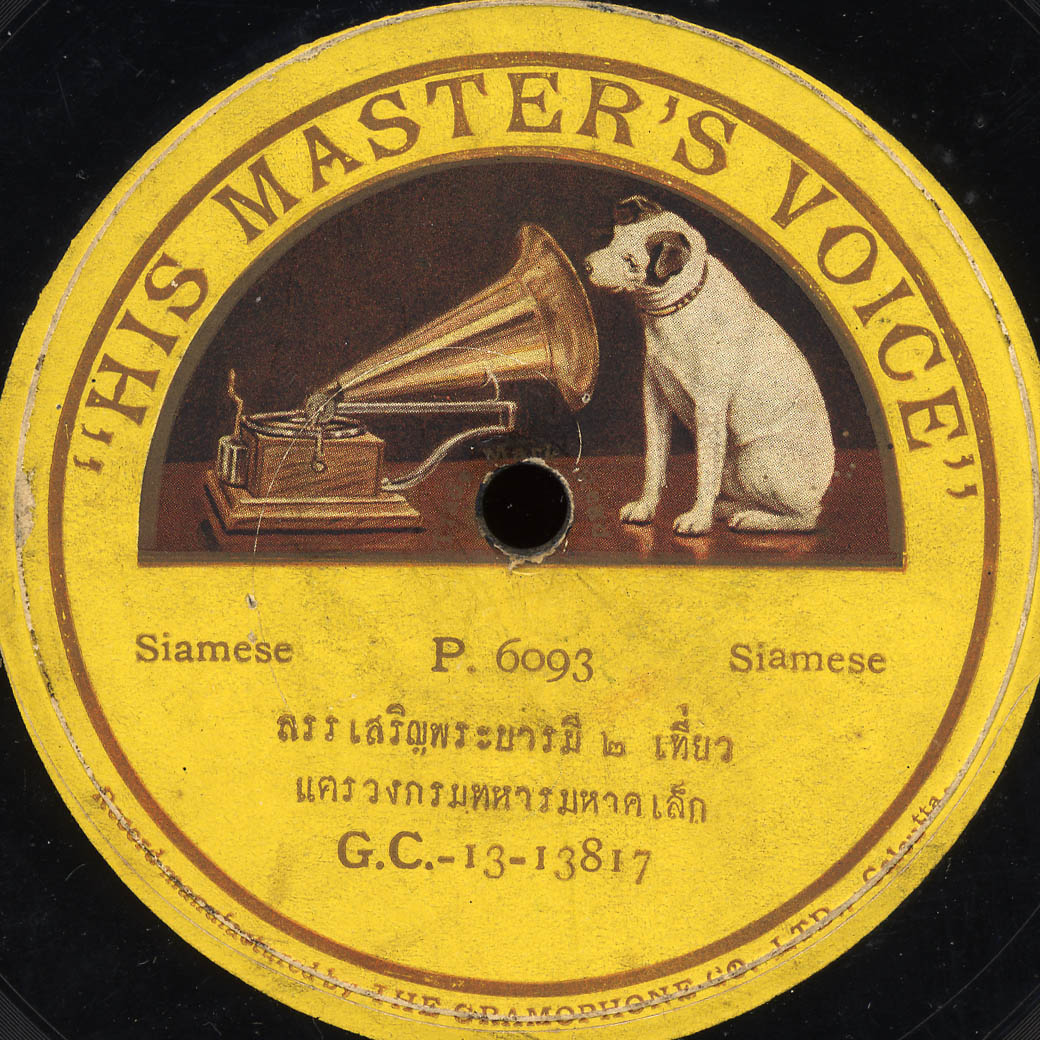
This record has two different versions of the royal anthem.
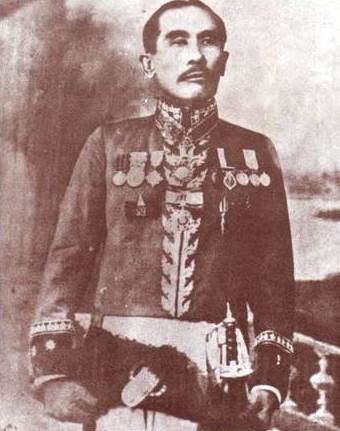
Side one (6082) is performed by พิณพาทย์ พระยาประสานดุริยศัพท์ (phinphat phraya prasanduriyasap). Phraya Prasanduriyasap is a famous maestro. He was teacher to Thailand’s most famous thai classical composer Luang Pradit Phairoh (on whose life the film “The Overture” is based).
Here’s a pic of Phraya Prasanduriyasap:
Side two (6093) is by แตรวงกรมทหารมหาดเล็ก (traewong krom thahan mahat lek) a branch of the Thai Royal Army.
There are many recordings of this anthem, but this is the first I’ve heard played by a piphat (classical) ensemble.The royal anthem is ubiquitous in Thailand, being played before official functions, films and on television.

Thanks again to Peter Doolan, from MONRAKPLENGTHAI, for translation and general info!
Filed under: Thailand
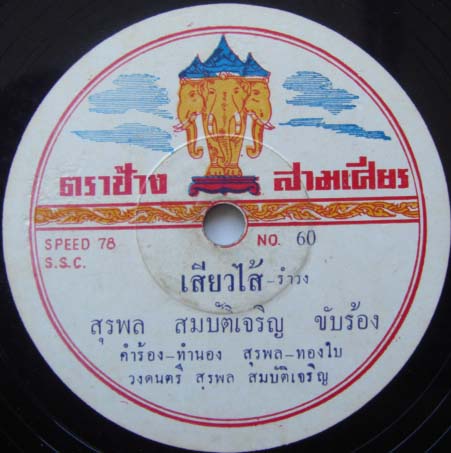
Thailand has an amazingly rich, diverse musical culture. It ranges from classical xylophone based ensembles (piphat) to funky rural genres like luk thung and molam.
This recording is of ระบำดาวดึงษ์ (Rabam Daowadueng), from the famous lakhon sang thong, a dance-drama written during the reign of king Rama II (1809-1824) and derived from the Jataka tales (a collection of folktales about the births of Buddha). The lyrics to this dance describe the second level of heaven; the abode of the god indra, who lends much assistance to the play’s protagonist, Phra Sang, the conch-shell prince. The story has many magical elements, such as an ogres who dies of a broken heart. There’s a brief plot summary here.
The performers are a piphat (classical) ensemble คณะดุริยะปราณีต (khana duriya pranit), along with a group of singers. originally this would have been an all-male production, at least in terms of the actors.
Piphat is the ensemble used for classical Thai music. There are several forms of piphat ensemble with different instrumental configurations, the basic form consists of the pi nai (oboe), ranat (xylophone), khong wong wai (gong circle) and various percussion instruments. The Cambodian version is called pinpeat.

Thanks to Peter Doolan for translation and general info, he’ll be pitching in here while we explore some Thai records. Be sure to check out his amazing and informative Thai cassette blog MONRAKPLENGTHAI.
Filed under: Cambodia
Here’s a beautiful record of mohori music from Cambodia. Mohori is a traditional Khmer ensemble, but the name also refers to the repertoire. There are different size ensembles, with different combinations of instruments consisting of flutes, fiddles, xylophones and percussion.
On this recording we hear khloy (flute), khimm (hammered dulcimer), tror so and tror ou (Different pitched 2 string fiddles), jakae (crocodile zither) and more
The label says kreung ksai, meaning string ensemble. The name Sak Som Peo on the right is most likely the name of the group or school.
The name of the song is Pleng Boran, meaning “Music from the Past”, which turns out to be more true than the musicians who recorded this in the 1940s could have guessed, songs like this disappeared with the many musicians who were brutally murdered by the Khmer Rouge.

Special thanks to Prof. Terry Miller (again) and Bee, a great Khmer musician. Here are his youtube performances.
Filed under: Vietnam
I thought I was finished with Vietnamese posting and ready to move on when I got my hands on this interesting record. After discussing the record with Jason Gibbs I decided it was worth posting. Most of the information in this post comes from him.
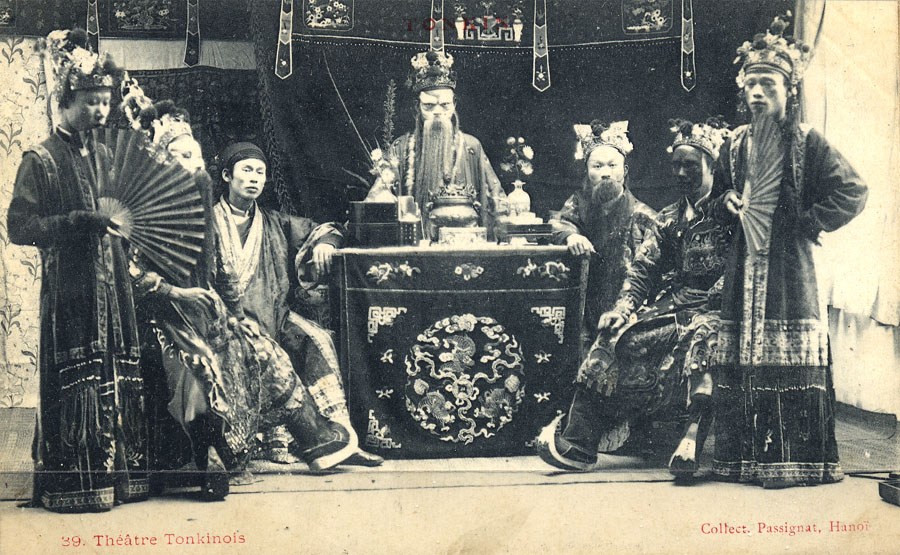
Hát bội (or tuồng theatre) is a form of Chinese opera imported into Vietnam as early as the 13th century. It uses costumes, gestures and stock characters similar to Chinese opera. The double reed instrument is the kèn, similar to the Chinese suona.
By the 1950s, the communist government in the North was issuing records of folk music and opera with propaganda lyrics. The song is entitled “Đấu tranh chống Mỹ” – “Fight Against America.” It is sung in the khách and nam modes of the tuồng theatre repertoire. The words are by Mịch Quang and are sung by Võ Sĩ Thừa. The music is played by the surrealistically named Dàn Nhạc Đội Tuồng LK 5 (The Ensemble of the Tuồng Troupe of Interzone 5). The 5th Interzone consists of Quảng Nam, Quảng Ngãi, Bình Định and Phú Yên provinces — the coastal region between Đà Nẵng and Túy Hòa.
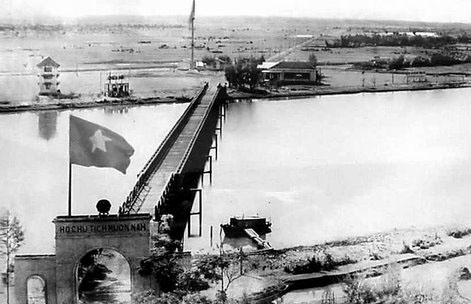
The significance of interzone is showing the solidarity between those who regrouped to the North with their comrades still below the 17th parallel (the Bến Hải river). They sing in the dialect and musical style of that region. The Bến Hải River marked the demarcation of the border between North and South Vietnam at the 17th parallel. The much evoked landmark for this border was the Hiền Lương bridge that crossed this river.
The below photo shot from the North show a gate to the bridge with the words: Hồ Chủ Tịch muôn năm – Premiere Hồ Forever.

Three postcards showing Vietnamese opera troupes:


Thanks again to Jason Gibbs!
Filed under: Vietnam
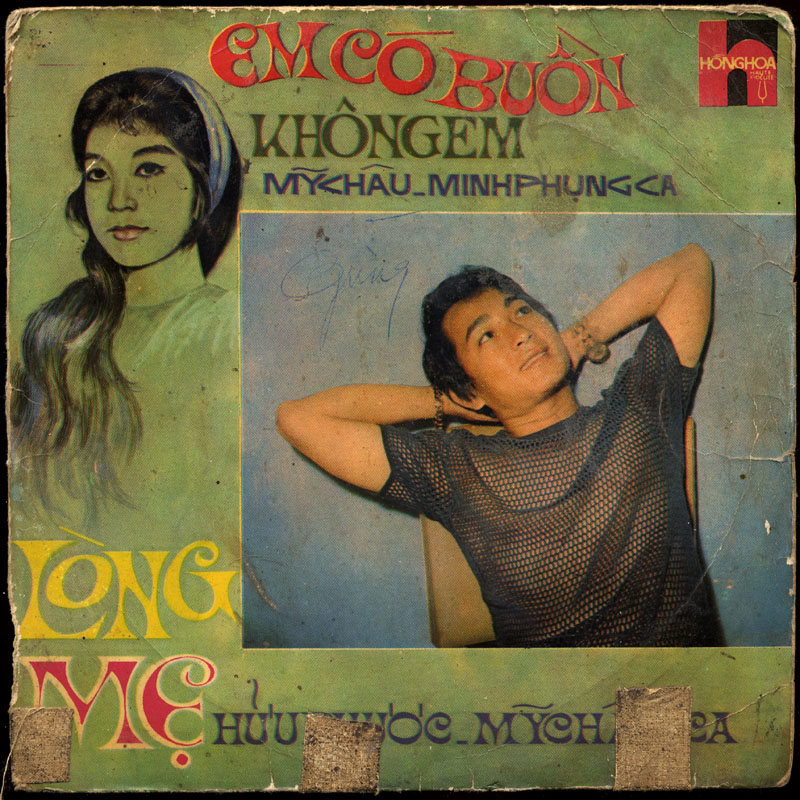
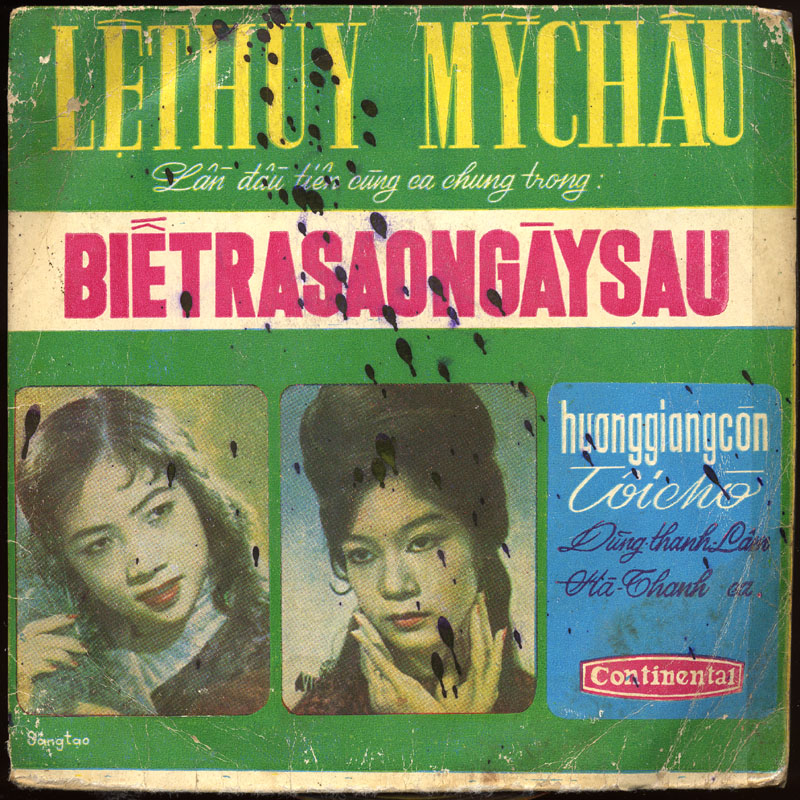
Cải lương was commonly found on 45rpm 7 inch records in the 60s and 70s. As discussed in the previous post, the music consists of pop introductions and traditional vọng cổ. The cover designs are wildly inventive, with unusual typefaces and sometimes shocking color schemes. Here’s a small sample:






Filed under: Vietnam
By the 1960s, Cai Luong had updated itself again. Now the vọng cổ sections were surrounded by Western pop styled intros and outros, from light swing to twangy rock, called tân cổ giao duyên (new and old songs of predestined affinity). On this record you can even hear the traditional instruments overlapping with the pop arrangement near the end.
The song title is Một chiều gặp gỡ – An Afternoon Encounter. Nhật Hạ (a pseudonym for the songwriter Khánh Băng) wrote the tân nhạc (modern music). The female vocal is by Thanh Nga, an idol of the cải lương stage and cinema in the South. The male vocal is Thành Được, a popular cải lương actor. Văn Vĩ plays the lục huyền cầm (literally 6 string instrument, guitar, in this case with scalloped out frets). Yên Sơn wrote the vọng cổ (lyrics that fit the skeletal melody).
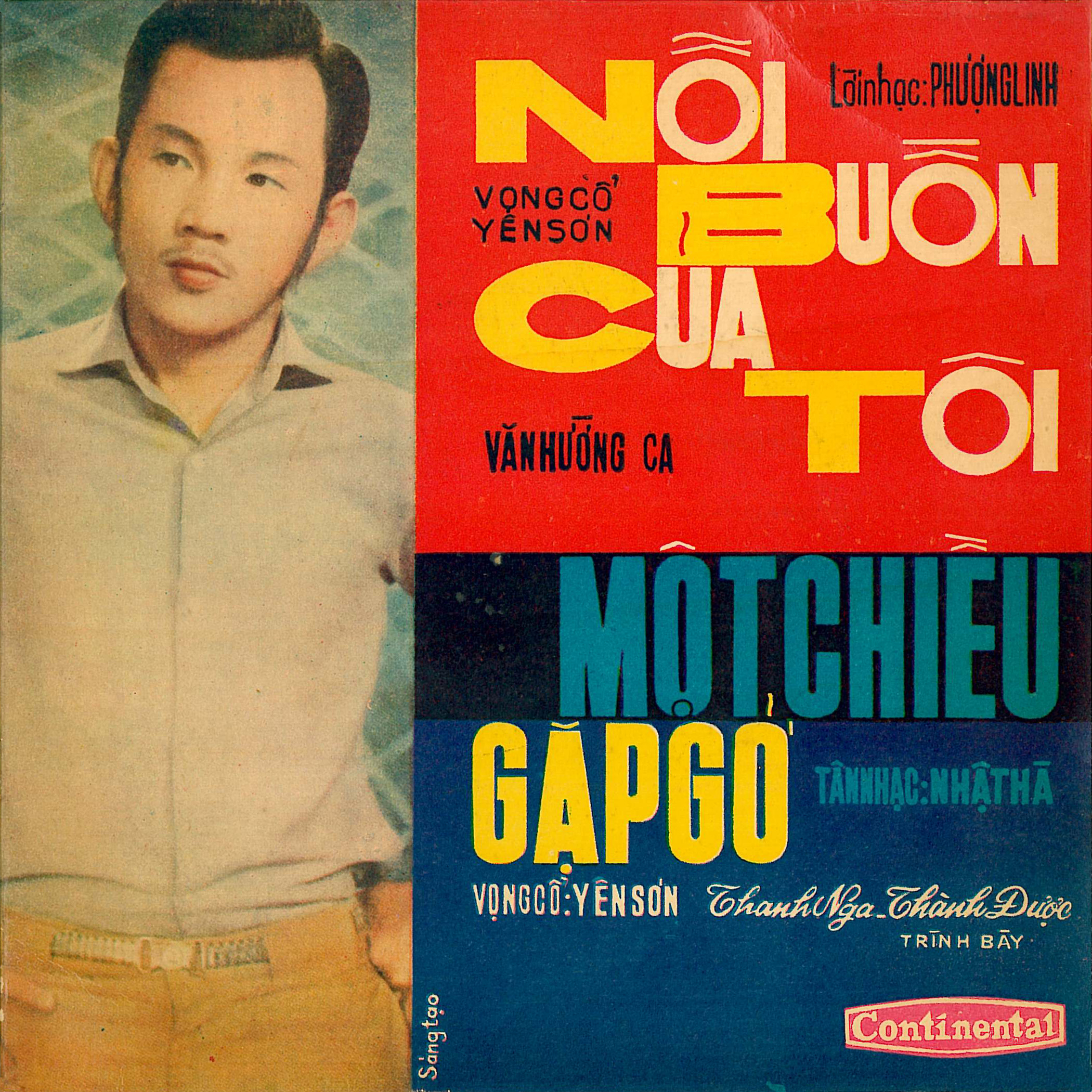
Thanks to Stuart from Radio Diffusion Internasionaal for hooking me up with this record. He’s got a great guest post at Excavated Shellac right now that’s worth checking out.
And another big ‘thank you’ to Vietnamese music researcher Jason Gibbs for his continuing help with translation and more. Vietnamese popular music is Jason’s main focus, with any luck we’ll hear more from him on the subject.
 HAJI MAJI