
Filed under: cantonese opera | Tags: 78 rpm, 78rpm, Amoy Opera, beijing opera, Beka, cantonese opera, chinese opera, erhu, Peking Opera, teochew

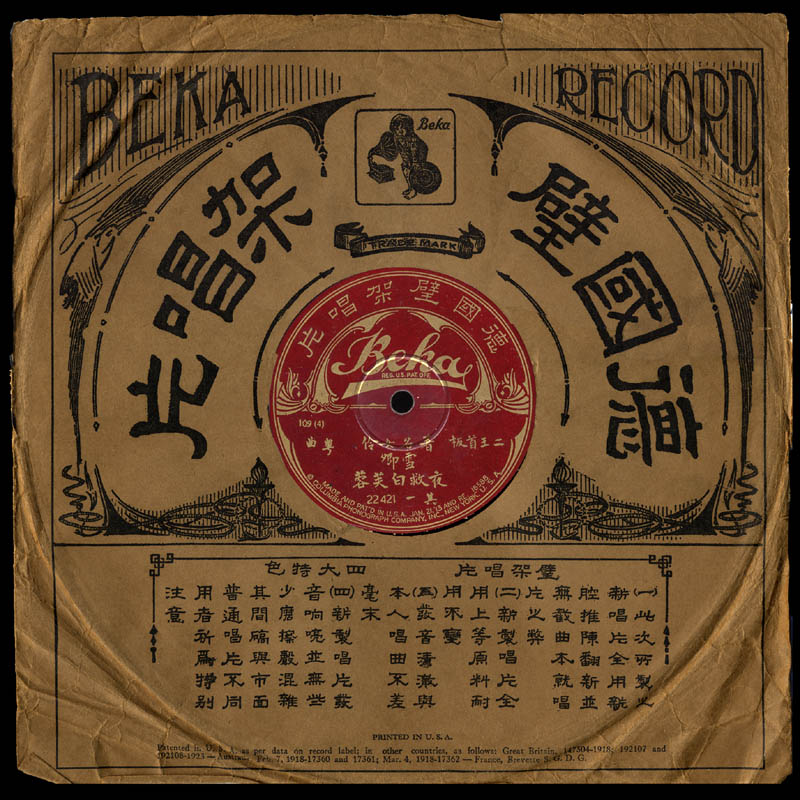
In contrast to my first post, which was a prime example of Peiping Opera, here’s a beautiful Cantonese song by Suie Hing, Yea Gua Ba Fu Yung, meaning Night Rescue of Ba Fu Yung. (Thanks again to Seneca Chew for translation.)
Beka recorded many of these amazing Cantonese songs but they tend to be in pretty bad condition…if you have some nice ones let me know!
Cantonese Opera songs tend to have less exuberant percussion and a nice, relaxed pulse with beautifully intertwined Erhu melodies, sometimes sounding like two different songs at once! While all forms of Chinese Opera are more related to folk music than western opera, the southern style, cantonese style, is more folk like than the more stylized northern style, or Peiping opera. Cantonese spread throughout southeast Asia and influenced the local folk theater of Vietnam, Indonesia, Malaysia and the general region.
Although Peiping Opera is considered a higher art form by some, the 78 rpm era saw a huge amount of Cantonese records being produced due to the massive emmigration of Cantonese speakers to countries around the world. For example, the Cantonese first arrived in California in the mid 19th Century and really boomed during the Gold Rush. San Francisco had a thriving Cantonese Opera scene and there are still amateur opera clubs there today. An excellent website on the subject can be found here, Pear Garden in the West.
Filed under: Peking Opera | Tags: 78 rpm, 78rpm, Amoy Opera, Bai Jurong, beijing opera, cantonese opera, chinese opera, erhu, Lanfang, Mei Lan Fang, Pathe, Peking Opera, Sanxian, teochew

The first time I heard Chinese Opera I was really shocked. I’ve listened to a lot of unusual music, but nothing seemed further from the western concept of music. I knew I was hooked immediately and had to look into this stuff…
I soon learned that there are two main types of Chinese Opera, and I’m talking about the 78 rpm era here, Peiping Opera (aka Peking or Beijing) and Cantonese Opera. Peiping Opera is a bit more “classical” while Cantonese style is a bit more “folk”. It’s good to keep in mind that the history of opera music in China, which was more or less their theater, folklore, and music all rolled into one, is a long and complicated story going back hundreds of years. I’m definitely not qualified to make any definitive statements about which style is older or the tangled webwork of influences.
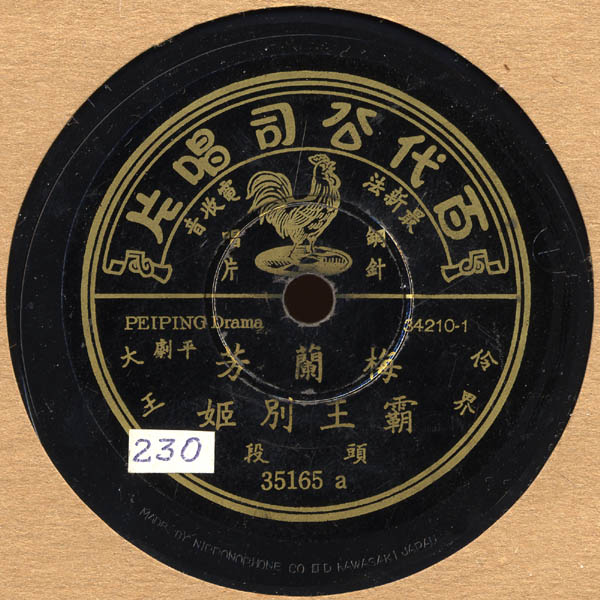
Peiping Drama, which is what this record is labeled as, usually consists of a fiddle-like instrument called Erhu or Jinghu, or one of the variations on it, and a handful of other stringed instruments. The general cacophony is provided by a rhythm section consisting of gongs, cymbals, woodblocks and such. The singing is in an unnaturally high voice, often sung by men performing the role of a woman (qingyi) and using stylized, archaic words with special pronunciation. This style tends to be much more wild than the Cantonese, with a lot of percussive effects that would be used to accompany physical action on stage such as acrobatics, elaborate fight scenes, hand gestures and general posturing.
Here, then, is a pretty typical example of this style, I’m guessing from the 1920’s. It seems to me that Pathe recorded the most records in this style while other labels tended to record more Cantonese.
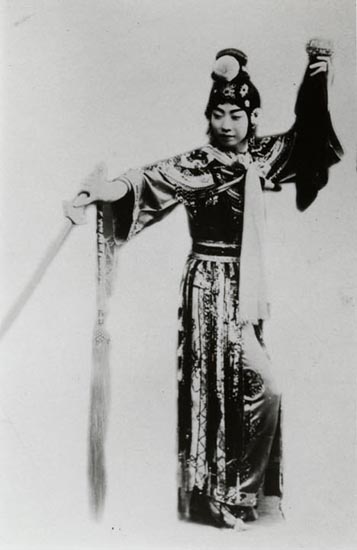
The singer is the “Opera King”, Mei Lan Fang, the internationally famous male singer known for qingyi roles. See the film Farewell My Concubine for some nice depiction of this.
Here he sings the prelude to his famous Ba Hwang Bia Gei, meaning Emperor Ba Hwang Bids Farewell to his Concubine. (thanks to Seneca Chew for translation!)
This is the strange story of a famous emperor who is despondent over the loss of his men in battle. The opera culminates with a famously complicated, stylized sword dance performed by his concubine as she commits suicide to express her loyalty to the emperor!
 HAJI MAJI